Fleet Tracking
Driver Accountability for Small Fleets: Using GPS Tracking to Prevent Misuse & Side Jobs
Improve driver accountability and stop after-hours misuse in small fleets. Learn how GPS tracking prevents side jobs and protects assets with GPS Leaders.


For small and mid-sized fleets—including service vans, work trucks, sales vehicles, C-class company cars, and light-duty commercial units—driver accountability is one of the most overlooked but financially significant areas of fleet management. With rising fuel costs, increased liability exposure, and tighter operating margins, small fleets can no longer afford unmonitored vehicle usage, unauthorized trips, or employees using company vehicles for personal benefit or side jobs.
Fortunately, modern GPS tracking gives small fleet operators the tools they need to protect their assets, reduce unnecessary expenses, and ensure vehicles are used exactly as intended. In this article, we’ll explore how GPS tracking delivers driver accountability, prevents misuse, reduces risk exposure, and supports small fleets in building a more efficient, compliant, and profitable operation.
This guide also connects each strategy to GPS Leaders Fleet Tracking, an advanced fleet solution built specifically to support small fleets with real-time visibility, accountability tools, and operational insights.Learn more at: https://gpsleaders.com/fleet-tracking
Why Driver Accountability Matters More for Small Fleets
While large fleets often have detailed policies, in-cab tech, and multiple layers of supervision, small fleets operate differently—they rely heavily on trust, consistent behavior, and employee self-management. But without visibility, trust alone becomes risky.
Vehicle misuse is more common than many small fleets realize
According to a widely cited fleet management study, nearly 40% of fleet vehicles are used for unauthorized personal trips without the business owner’s knowledge.Source: Automotive Fleet Researchhttps://www.automotive-fleet.com
Additionally:
- Idle fuel waste costs U.S. fleets more than $10–$12 billion annuallySource: U.S. Department of Energyhttps://www.energy.gov
- Small fleets experience higher incident rates per vehicle because each asset represents a larger percent of total operations.Source: Zipdo Fleet Statisticshttps://zipdo.co/fleet-industry-statistics/?utm_source=chatgpt.com
- Unauthorized side jobs significantly increase liability, especially when employees use company vehicles for personal gain.
The most common small-fleet misuse problems include:
- After-hours personal driving
- Hidden side jobs conducted using fleet vehicles
- Employees using vehicles for family or friends
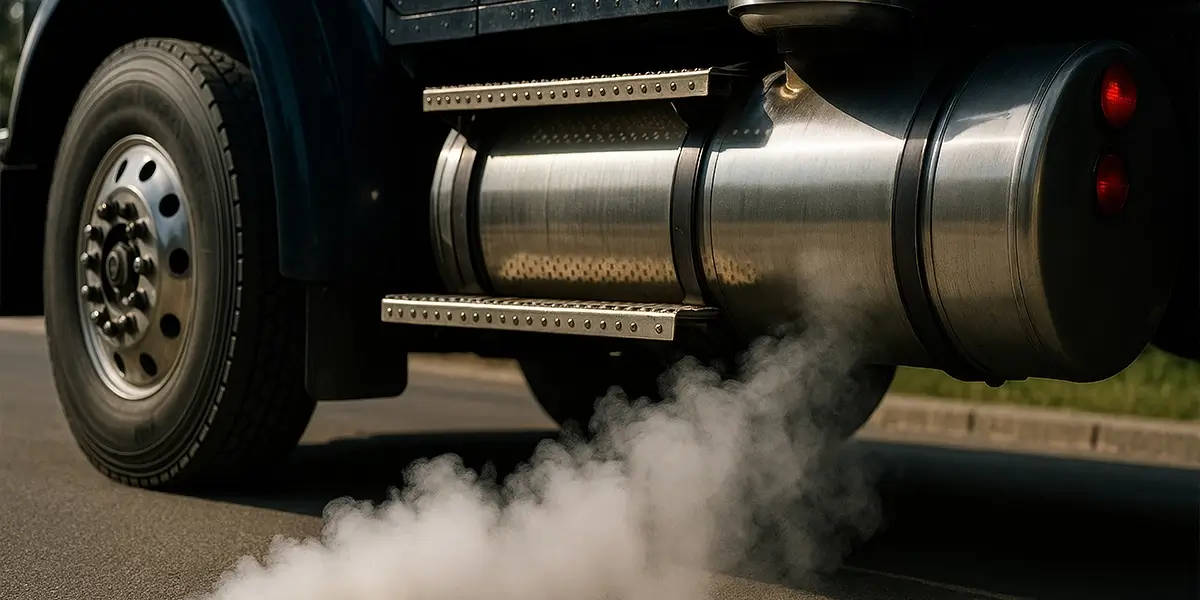
- Excessive idling to stay warm/cool
- Unauthorized long lunches or off-route travel
- Weekend use without approval
- Risky driving behavior that exposes the company to lawsuits
- Fuel card fraud tied to unauthorized vehicle use
- Using the fleet vehicle as a personal daily-driver
Without GPS tracking, most fleet owners only discover misuse when damage occurs, fuel expenses spike, or customer complaints arise.
GPS tracking eliminates the guesswork.
How GPS Tracking Prevents After-Hours Use & Personal Trips
One of the easiest forms of misuse to detect—and stop—is after-hours and personal driving.
✔ Geofencing alerts notify owners immediately
Small fleets can create custom geofences around:
- Home office
- Service areas
- Employee residences
- Customer sites
- Restricted regions
If a vehicle leaves the authorized zone after hours, an alert is sent instantly.
✔ Set authorized operating hours
GPS systems can define specific hours a vehicle is allowed to be in use.If a driver uses the vehicle before or after the assigned window, the fleet manager receives:
- Phone alerts
- Email notifications
- Reports showing unauthorized mileage
This eliminates excuses and reinforces accountability.
✔ Trip replay shows where the vehicle really went
GPS Leaders provides trip history letting fleets reconstruct exact:
- Routes
- Stops
- Time at each location
- Speed patterns
- Start/stop behavior
This capability stops disputes instantly—data doesn’t lie. For video as well as location, see our AI dash cameras with GPS tracking built in .
How GPS Tracking Stops Side Jobs & Unapproved Work
Side jobs are one of the biggest blind spots for small fleet owners. Employees sometimes leverage company vehicles for personal profit, including:
- Weekend contracting
- Off-books service calls
- Hauling or delivery jobs
- Ride-share/contracting gigs
- Using fuel cards for non-company trips
GPS Tracking Stops Side Jobs By Providing:
✔ Route and stop detail
If a vehicle is regularly traveling to unknown sites, unexpected customer homes, or locations not related to company business, GPS tracking will show it immediately.
✔ Mileage reporting
Unusual mileage increases are one of the biggest side-job flags.
✔ Vehicle behavior monitoring
Patterns such as:
- Very early morning starts
- Late-night activity
- Repeated weekend drivingare strong indicators something is wrong.
✔ Accountability through data
When drivers know that every mile is tracked, misuse drops sharply.
Reducing Liability, Accidents & Risk Exposure
Small fleets face higher risk per vehicle because a single loss has greater impact.GPS tracking strengthens liability protection in several ways:
✔ Monitor driving behavior
Small fleet drivers are more likely to multitask, take calls, or speed because they operate alone.
According to the FMCSA, aggressive driving contributes to 33% of commercial vehicle crashes.Source: FMCSA Crash Reporthttps://www.fmcsa.dot.gov
GPS tracking allows fleets to monitor:
- Speeding
- Harsh braking
- Rapid acceleration
- Unusual patterns
- Unsafe driving zones
Addressing poor driving behavior reduces accidents and insurance claims.
✔ Automated risk alerts
Alerts notify fleet managers if:
- A driver enters risky neighborhoods
- A vehicle is used at unsafe times
- Speed events exceed company policy
✔ Proof during insurance disputes
Tracking data serves as digital documentation that can be used during:
- Accident investigations
- Fraud attempts
- False claims
- Liability disputes
This protects small fleets from costly legal exposure.
Fuel Savings: One of the Biggest Financial Benefits
For small fleets, fuel is often the #1 operating cost, making misuse extremely expensive.
According to the U.S. DOE:
- Idling burns up to 0.8 gallons per hour
- Drivers idle an average of 1–2 hours per day
- Some drivers idle purely for personal comfortSource: U.S. Department of Energyhttps://www.energy.gov
That’s:
- ~400–600 wasted gallons per vehicle per year
- Thousands of dollars in unnecessary cost for small fleets
GPS tracking eliminates this by alerting managers when idling exceeds:
- X minutes
- X hours
- X locations (non-job-related)
Plus, misuse mileage wastes fuel during unauthorized personal trips and side jobs.
Improving Employee Transparency & Trust
Ironically, fleets that adopt GPS tracking often report stronger relationships with drivers—not weaker. Why?
✔ Clear expectations create structure
Employees know what’s allowed and not allowed.
✔ Tracking reduces false blame
GPS data can clear drivers when customers accuse them of not arriving.
✔ Tracking eliminates favoritism
Managers can measure productivity and compliance consistently across all drivers.
✔ Mileage, timecards, and job documentation improve
Trip history becomes proof of:
- On-site time
- Route taken
- Job completion
This reduces disputes and improves billing accuracy.
Why GPS Leaders Is Ideal for Small Fleet Accountability
GPS Leaders offers a fleet tracking solution specifically designed to help small fleets enforce accountability while keeping operations simple and cost-effective.
✔ Real-time tracking & trip replay
See where vehicles are and where they’ve been—down to each street and stop.
✔ Geofencing for after-hours control
Stop unauthorized usage instantly.
✔ Driver behavior monitoring
Reduce accidents and enforce company driving standards.
✔ Idle time control
Cut fuel waste and hold drivers accountable.
✔ Documentation for disputes
Use tracking logs to protect your business.
✔ Affordable, scalable system
No heavy enterprise overhead—built for small and mid-sized fleets.
Learn more about GPS Leaders’ fleet tracking solutions:👉 https://gpsleaders.com/fleet-tracking
Best Practices for Implementing GPS Accountability in Small Fleets
1. Create a clear usage policy
Include:
- Operating hours
- Personal use rules
- Fuel card limitations
- Expected driving behavior
- Consequences for misuse
2. Disclose vehicle tracking openly
Most states require simple disclosure when GPS is used for fleet management.Disclosure builds trust and reduces conflict.
3. Set automated alerts
Configure alerts for:
- After-hours movement
- Geofence exits
- Excessive idle
- Unauthorized stops
4. Hold quarterly driver reviews
Use tracking data to celebrate good behavior and correct problems early.
5. Compare drivers by KPIs
Measure:
- Miles per job
- Idle time
- Speed violations
- Route efficiency
- Timeliness
The best performers help set the standard for the rest.
Conclusion: Driver Accountability Protects Small Fleets
For small fleets, every vehicle matters—and every mile matters. GPS tracking allows fleet owners to protect their vehicles, reduce misuse, prevent side jobs, lower liability, and improve operational efficiency.
By implementing driver accountability tools through GPS Leaders Fleet Tracking, small fleets get:
- Greater visibility
- Lower fuel costs
- Reduced unauthorized usage
- Increased driver compliance
- Better documentation
- Increased profitability
Every mile becomes a business mile—not a personal one.
Take control of your fleet, reduce risk, and eliminate misuse with GPS tracking designed specifically for small fleets.
👉 Learn more about GPS Leaders Fleet Tracking: https://gpsleaders.com/fleet-tracking
👉 Book a Demo
👉 Or speak with a fleet specialist today: (855) 432-6423
Empower your fleet with accountability. Protect your vehicles, your drivers, and your bottom line.