Trailer Tracking Device: Solar, Battery or Hardwired?
Key takeaways
- Match the tracker to the power you have. Hardwired suits a trailer with its own battery; battery-powered or solar suits one that sits unhooked with no power.
- Battery life and update speed trade off against each other. The less often a tracker reports, the longer its battery lasts.
- Placement matters as much as the device. Experienced thieves look for trackers, so hide it well and use a power-cut or tamper alert where you can.
- No tracker can promise you'll get a trailer back. What it gives you is a fast answer to "where is it?" so you and the police can act.
What's the best GPS tracker for a trailer?
There isn't one answer for every trailer. Three questions narrow it down quickly:
- Does the trailer have its own battery, like the house battery on a travel trailer or toy hauler?
- How quickly do you need to know it has moved: within minutes, or is once a day enough?
- How long does it sit unhooked: overnight, or for weeks in a yard or storage lot?
A trailer that sits for weeks needs a tracker that lasts without charging and tells you when it moves. A trailer that is on the road every day, or has its own battery, can take a hardwired unit that reports often.
Solar vs battery vs hardwired
Hardwired
A hardwired tracker runs off a battery on the trailer, so it can report often without ever being recharged. The tow vehicle's plug only supplies power while the trailer is hooked up, so for tracking while parked it needs a battery on the trailer itself. Installation takes more work, and a power-disconnect alert tells you if someone cuts it.
Battery-powered
A self-contained unit with its own battery. It is quick to install and easy to hide almost anywhere. Battery life depends on how often it reports, so it suits trailers that sit for long periods and don't need minute-by-minute updates.
Solar
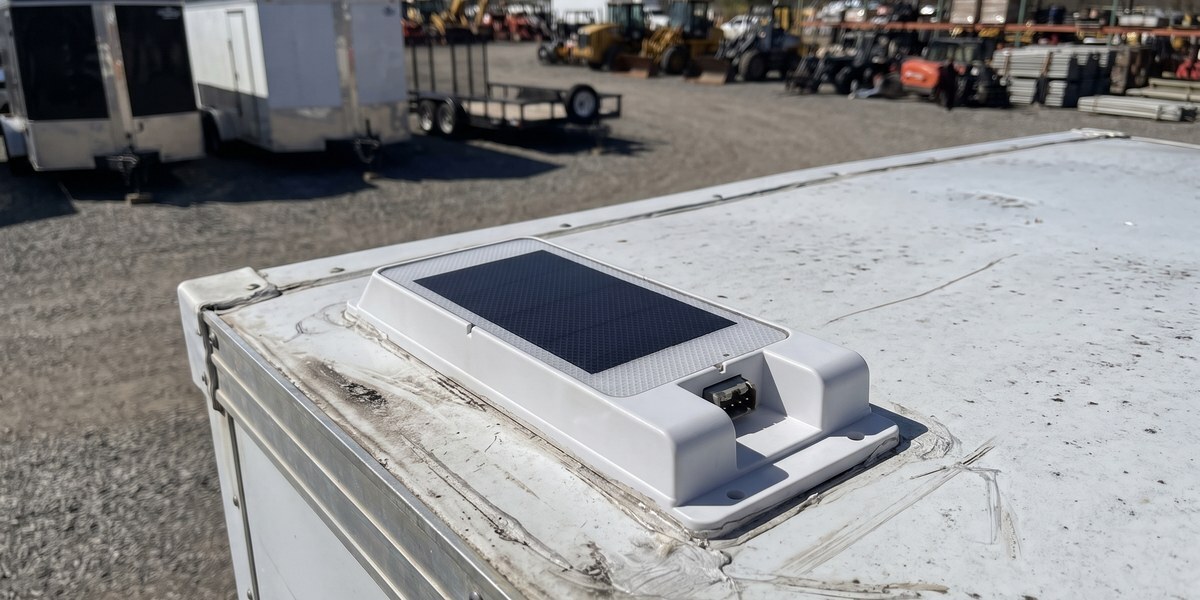
A battery tracker with a small solar panel that tops it up. It has to be mounted where sunlight reaches it, which can also make it easier to spot. It suits trailers stored outdoors that you rarely check. In shaded storage or long cloudy spells it runs on its battery like any other unit.
How often should a trailer tracker report?
Reporting frequency is the trade-off between battery life and how fast you see a move. A tracker that checks in once a day can last a long time on one battery, but a thief could have the trailer hours away before you know. Some battery trackers report more often once they sense movement, which helps close that gap.
Hardwired units can report on a short schedule all the time. The GPS Leaders rugged tracker, built for trailers as well as machines, updates every 10 minutes and sends alerts as they happen.
When you compare battery life, ask for the figure at the reporting schedule you actually plan to use, not the best-case number.
Where to hide a trailer tracker
- Skip the tongue and coupler area. That is the first place a thief looks.
- Mount it inside a frame rail, behind a panel or inside the trailer, out of sight from the ground.
- Avoid burying it in heavy metal on every side, which can block the signal. Plastic and fiberglass let GPS and cellular signals through.
- Some owners fit a second hidden tracker as a backup in case the first one is found.
What to do if your trailer is stolen
- Check its current location and movement history.
- Call the police with the VIN, plate number and live location. Don't try to recover it yourself.
- Call your insurer.
- Before anything happens, keep the VIN, plate, photos and any distinguishing marks on file, so the report is quick.
Recovery is far from certain. About 63% of stolen RVs remain unrecovered (NICB, 2025 data). For commercial trailers, cargo theft losses reached an estimated $725 million in 2025, up 60% (Verisk CargoNet, 2025 Supply Chain Risk Trends). A tracker shortens the time between the theft and the call to police, which is where it helps most.
Trailer tracker vs AirTag
AirTags are cheap and easy to hide, and plenty of owners use them. They find their location through nearby Apple devices, so they work best where people are around and can be slow to update on rural roads or in quiet storage lots. iPhones also warn people when an unknown AirTag is traveling with them, which can tip off a thief.
A cellular GPS tracker reports on its own schedule from anywhere with coverage, and can alert you the moment the trailer leaves a set area or loses power.
What GPS Leaders offers
- Rugged, weatherproof trackers built for trailers, machines and other off-road assets.
- Hardwired 4G LTE with 10-minute location updates in the U.S., Canada and Mexico.
- Geofences, plus alerts for after-hours movement and power disconnects.
- No contracts.
Every trailer setup is different, so talk to a GPS Veteran about yours, or see the heavy equipment tracking page.
FAQ
Do solar GPS trackers work on trailers?
Yes, if the panel gets regular sunlight. The panel tops up the battery so it lasts longer between charges. In shade or long cloudy stretches the tracker runs on its battery alone.
How long does a trailer tracker battery last?
It depends mostly on how often the tracker reports. Fewer check-ins mean longer battery life and slower alerts. Ask for the battery life at the schedule you plan to use.
Can I power a tracker from the trailer's plug?
Only while the trailer is hooked to the tow vehicle. To track it while it is parked, you need a battery on the trailer or a battery-powered tracker.
Will a tracker stop my trailer from being stolen?
No. It tells you when the trailer moves and where it is. Pair it with a coupler lock or wheel lock to make the trailer harder to take in the first place.
Can I track a trailer in Canada or Mexico?
The GPS Leaders tracker uses 4G LTE coverage in the U.S., Canada and Mexico.